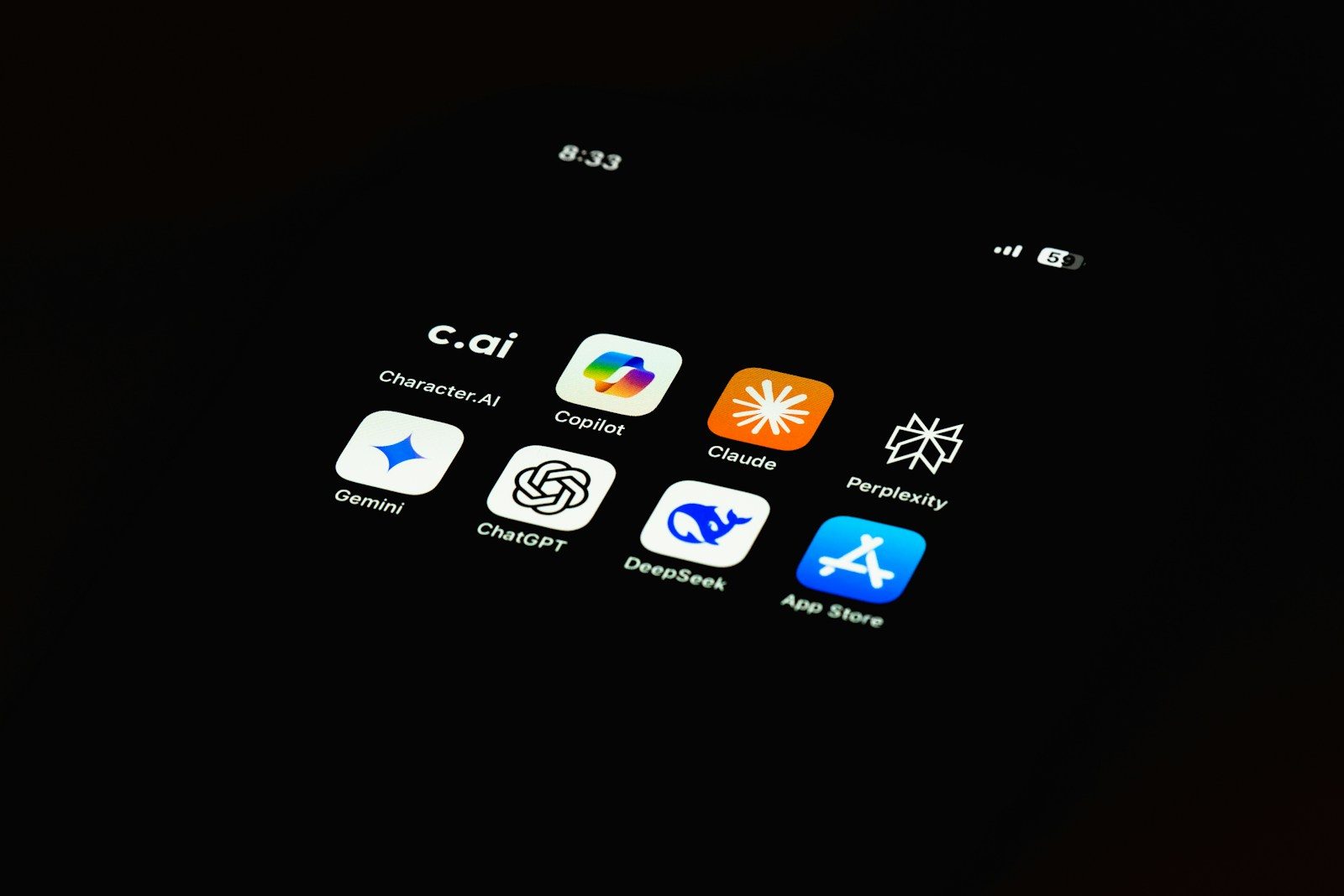
2026 is the year AI stopped being a tool professionals experiment with and became infrastructure professionals depend on.
The shift has been gradual enough that many missed it happening. Then they looked up and realized that colleagues who had adopted AI workflows six months ago were producing measurably more, advancing faster, and operating with a clarity of output that was difficult to attribute to anything other than the systematic use of AI in their professional practice.
This article covers the most significant AI developments of 2026 — the product releases, capability expansions, and adoption patterns that matter most for working professionals. Not every AI announcement deserves attention. The ones in this article do.
- 1. The Agentic AI Shift: From Assistants to Agents
- 2. GPT-4o and Claude 3.5 in Enterprise: Deployment at Scale
- 3. Reasoning Models: A Different Kind of AI Capability
- 4. Multimodal AI: Working with Images, Audio, and Video
- 5. AI Coding Tools: GitHub Copilot and the Developer Productivity Gap
- 6. AI Regulation: What North American Professionals Need to Know
- 7. The Productivity Divergence: Early Adopters vs Everyone Else
- Looking Ahead: What to Watch in the Second Half of 2026
- Conclusion
1. The Agentic AI Shift: From Assistants to Agents
The most significant structural change in AI in 2026 is not a specific product release. It is a category shift — from AI systems that respond to prompts to AI systems that take autonomous action over extended periods.
The distinction matters practically. An AI assistant answers your question. An AI agent reads your email, identifies what needs a response, drafts replies, sends them pending your approval, updates your calendar based on the thread, and notifies you only when genuine judgment is required.
OpenAI’s operator-level agents, Anthropic’s expanding Claude tool use capabilities, and platforms like OpenClaw have moved agentic AI from research demonstration to professional deployment in 2026. The professionals who are building trust in these systems now — learning which tasks to delegate autonomously and which require human oversight — are building a capability advantage that will compound as agent capabilities expand.
What this means for professionals: The most immediate practical implication is that the relevant question is no longer “can I use AI for this task?” It is “how much of this workflow can I delegate to an AI agent, and what approval structure do I need around the delegated portions?”
2. GPT-4o and Claude 3.5 in Enterprise: Deployment at Scale
The enterprise AI deployment story of 2026 is not about individual professionals adopting new tools — it is about organizations deploying AI at scale across their workforce.
Microsoft Copilot, embedded across the Microsoft 365 suite, has reached meaningful deployment levels in enterprise environments. Google’s Gemini integration across Workspace has followed. Salesforce Einstein, ServiceNow AI, and vertical-specific AI deployments have moved from pilot programs to standard operating procedure at large organizations.
The practical implication for professionals is that AI capability is increasingly available within the tools you already use — without requiring separate subscriptions or workflow changes. The professionals who understand what these embedded tools can do have immediate access to capabilities their less informed colleagues are not using.
What to check immediately: If you use Microsoft 365, check whether Copilot is available in your organization’s subscription. If you use Google Workspace, verify which Gemini features are active in your account. The tools may already be available — simply unused.
3. Reasoning Models: A Different Kind of AI Capability
A meaningful technical development in 2026 is the maturation of reasoning models — AI systems specifically designed to work through complex, multi-step problems more carefully than standard language models.
OpenAI’s o-series models and Anthropic’s extended thinking capabilities represent AI systems that spend more computational effort reasoning through problems before producing outputs. The practical result is meaningfully better performance on tasks that require logical chains, mathematical reasoning, and complex analysis — at the cost of slower response times.
For professionals, the implication is that the right AI model for a task depends on what the task requires. Speed and versatility favor standard models. Complex analysis, logical reasoning, and multi-step problem solving favor reasoning models.
Practical guidance: Use standard ChatGPT or Claude for drafting, research synthesis, and routine professional tasks. Switch to reasoning-oriented models for financial modeling, complex strategic analysis, legal document review, and any task where the quality of the reasoning chain matters more than the speed of the response.
4. Multimodal AI: Working with Images, Audio, and Video
In 2026, the leading AI models — GPT-4o, Claude 3.5, and Gemini — all handle images, audio, and video as naturally as text. The professional applications of this multimodal capability are still being discovered, but several have become standard practice.
Document and image analysis: Professionals can now photograph a whiteboard, a printed contract, a handwritten note, or a complex diagram and ask an AI to analyze, transcribe, or act on its contents — without manual data entry or specialized OCR software.
Meeting and video analysis: AI tools can now analyze recorded video calls — identifying speakers, transcribing content, and generating summaries — with accuracy that has crossed the threshold of practical professional use.
Visual content creation: For professionals who produce presentations, reports, and client-facing materials, AI image generation has matured to the point where conceptual visuals, diagram drafts, and illustrative imagery can be produced in minutes rather than hours.
What this means for professionals: The bottleneck between “I have this information in a non-text format” and “I can work with this information in my AI workflow” has largely disappeared. If information exists in any format, AI can now work with it.
5. AI Coding Tools: GitHub Copilot and the Developer Productivity Gap
The productivity gap between developers using AI coding assistants and those who are not has become measurable and significant in 2026.
GitHub Copilot, Cursor, and similar AI-integrated development environments have moved from novelty to standard professional tool for software developers. Studies published in 2025 and early 2026 consistently show productivity improvements of 30–55% for routine coding tasks among developers using these tools compared to those who are not.
The more significant development is that AI coding tools are expanding the population of professionals who can produce functional code. Non-developer professionals — analysts, operations managers, marketers — are increasingly using AI coding assistance to produce Python scripts, automate data processing, and build simple internal tools that would previously have required dedicated development resources.
What this means for non-developers: The ability to produce functional code with AI assistance — even without a programming background — is becoming a meaningful professional differentiator. Professionals who learn to use AI coding tools effectively can solve problems that previously required technical team involvement.
6. AI Regulation: What North American Professionals Need to Know
The regulatory environment around AI use in professional contexts is evolving rapidly — and 2026 has brought several developments with direct professional implications.
Canada’s AI regulatory direction: Canada’s Artificial Intelligence and Data Act (AIDA) continues its legislative development. The key provisions relevant to professionals involve obligations around transparency — organizations deploying high-impact AI systems must be able to explain the decisions those systems make — and accountability for AI-generated outputs used in consequential professional decisions.
For individual professionals, the practical implication is that AI tools used in professional contexts carry professional accountability. An AI-generated legal analysis, financial recommendation, or medical assessment that turns out to be wrong is your professional responsibility — not the AI provider’s.
Privacy considerations: Using AI tools that process client personal information requires consideration of applicable privacy law — PIPEDA federally and provincial equivalents, particularly Quebec’s Law 25 which has been called one of North America’s most stringent AI-related privacy frameworks. Before using AI tools to process client data, verify the tool’s data handling practices and confirm compliance with applicable law.
What professionals should do: Maintain awareness of what AI tools you are using for professional purposes and what data they process. Ensure your use of AI in professional contexts is consistent with your professional obligations and the privacy rights of clients and stakeholders. When in doubt, consult your organization’s legal counsel or a qualified privacy professional.
7. The Productivity Divergence: Early Adopters vs Everyone Else
Perhaps the most important AI development of 2026 is not a technology story. It is a professional performance story.
The gap between professionals who have integrated AI into their workflows and those who have not has become visible and measurable in organizational contexts. It shows up in output volume, quality consistency, and the range of tasks that individuals can handle without support.
This gap is not primarily about intelligence or effort. It is about tool proficiency — the same variable that separated professionals who learned to use spreadsheets effectively in the 1990s from those who did not.
The professionals on the right side of this gap in 2026 share common characteristics: they started earlier than they felt ready to, they applied AI to their highest-value tasks rather than the easiest ones, and they invested time in developing prompting skills and workflow integration that produced compounding returns.
What this means: The most important AI development of 2026 for any individual professional is not a product announcement. It is the decision to build systematic AI proficiency before external pressure makes it urgently necessary.
Looking Ahead: What to Watch in the Second Half of 2026
Agentic AI adoption: The platforms that make it easiest to deploy AI agents for professional workflows — with appropriate approval structures and human oversight — will see the fastest adoption among business professionals.
Voice AI maturation: Real-time voice interfaces for AI assistants have improved significantly. The use of voice-based AI for professional tasks — meeting preparation, quick research, mobile task management — is likely to become more common as reliability improves.
Specialized professional AI: Vertical AI tools built specifically for legal, medical, financial, and engineering professional contexts are maturing. Professionals in these fields should monitor the specialized tools emerging in their domain.
AI in hiring and performance management: AI’s role in professional evaluation — both as a tool used in hiring and as a factor in performance assessment — is expanding in ways that have direct implications for how professionals present and document their work.
Conclusion
The AI developments of 2026 share a common theme: AI is moving from the periphery of professional practice to its center.
The professionals who navigate this transition most effectively are those who stay current with meaningful developments — not every product launch, but the capability shifts that actually change what professional work looks like — and who build systematic habits of AI integration before those habits become urgently necessary.
The developments covered in this article are the ones that matter. The question is what you will do with them.


Comments