Video calls have a sound problem that most professionals have learned to tolerate — but do not have to.
Background noise from your environment bleeds into calls. Audio from the other end sounds compressed and distant. You strain to hear participants in noisy environments. And after four or five calls, the fatigue from suboptimal audio has accumulated into something that feels like concentration failure but is actually auditory overload.
The right noise-canceling headphones solve all of these problems simultaneously — eliminating the background noise that reaches your microphone, delivering clear incoming audio through quality drivers, and reducing the cognitive load of listening to compressed call audio for hours at a stretch.
This guide focuses specifically on headphones for video calls — not for music, not for commuting, not for gaming — and ranks them on the criteria that matter for professional call use: microphone quality, noise cancellation on the outgoing audio, call comfort over long sessions, and compatibility with the platforms professionals use daily.
For a broader overview covering all remote work use cases, see our complete guide: Best Noise-Canceling Headphones for Remote Work in 2026.
- What Matters for Video Call Headphones
- Quick Comparison Table
- 1. Jabra Evolve2 85 — Best Headphones for Video Calls Overall
- 2. Bose QuietComfort Ultra — Best Call Headphones for Professionals Who Also Want Premium Audio
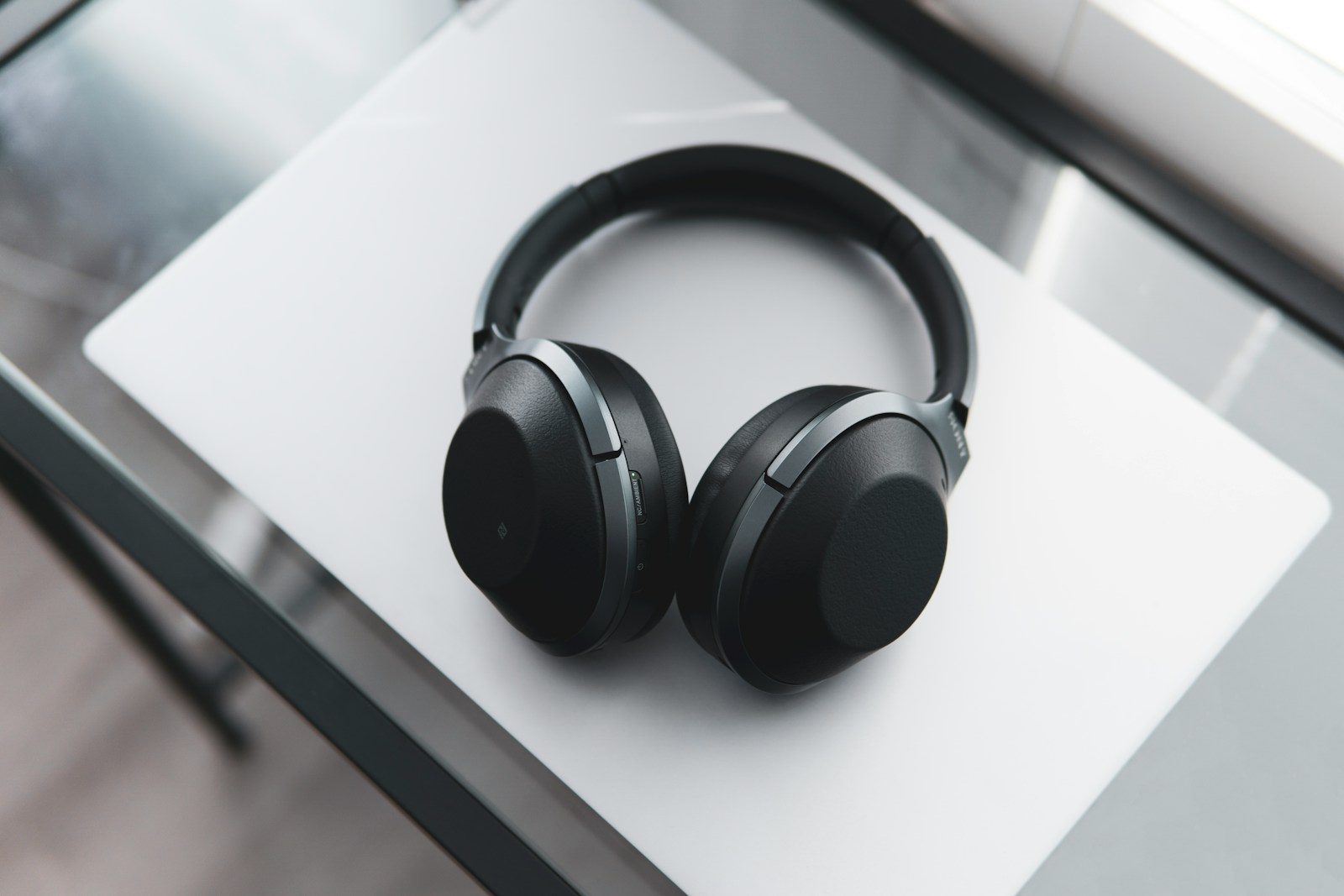
- 3. Sony WH-1000XM5 — Best Value Premium Headphone for Video Calls
- 4. Apple AirPods Max — Best for Apple Ecosystem Professionals
- 5. Jabra Evolve2 55 — Best for All-Day Call Professionals on a Budget
- 6. Anker Soundcore Q45 — Best Budget Headphone for Video Calls
- Headphone vs Headset: Which Is Right for Video Calls?
- Optimizing Your Video Call Audio Setup
- For Canadian Professionals
- FAQ
- Conclusion
What Matters for Video Call Headphones
Microphone quality — the most important criterion: Your microphone determines how you sound to everyone on every call. A headphone with outstanding speakers but a poor microphone is the wrong tool for professional video calls. The best call headphones prioritize microphone clarity, wind and background noise rejection on the outgoing audio, and voice pickup accuracy.
Active noise cancellation (ANC) — for your listening comfort: ANC reduces the environmental noise reaching your ears — allowing you to hear call participants clearly without raising volume to compensate, and reducing the fatigue that comes from listening in noisy environments. For calls conducted in home offices with household noise, coworking spaces, or public environments, ANC is essential.
Call comfort over 2–4 hour sessions: Video call marathons are a professional reality. Headphones that feel comfortable for 30 minutes can become painful over a 3-hour call block. Clamping force, ear cushion material, and headband padding all affect sustained call comfort in ways that brief try-ons in stores do not reveal.
Platform compatibility: Zoom, Microsoft Teams, Google Meet, and Webex all have specific audio driver support. The best call headphones integrate natively with major platforms — providing automatic answer/end call controls, mute synchronization, and call status indicators that reduce friction during calls.
Battery life: Wireless headphones need enough battery for a full professional day of calls — a minimum of 20 hours, with 30+ preferred for professionals who use them continuously.
Quick Comparison Table
| Headphone | Mic Quality | ANC | Call Comfort | Battery | Price (USD) |
|---|---|---|---|---|---|
| Jabra Evolve2 85 | ⭐⭐⭐⭐⭐ | ⭐⭐⭐⭐⭐ | ⭐⭐⭐⭐⭐ | 37 hrs | $449–$499 |
| Bose QuietComfort Ultra | ⭐⭐⭐⭐⭐ | ⭐⭐⭐⭐⭐ | ⭐⭐⭐⭐⭐ | 24 hrs | $349–$429 |
| Sony WH-1000XM5 | ⭐⭐⭐⭐ | ⭐⭐⭐⭐⭐ | ⭐⭐⭐⭐ | 30 hrs | $279–$349 |
| Apple AirPods Max | ⭐⭐⭐⭐⭐ | ⭐⭐⭐⭐⭐ | ⭐⭐⭐⭐ | 20 hrs | $549 |
| Jabra Evolve2 55 | ⭐⭐⭐⭐⭐ | ⭐⭐⭐⭐ | ⭐⭐⭐⭐ | 56 hrs | $299–$349 |
| Anker Q45 | ⭐⭐⭐ | ⭐⭐⭐⭐ | ⭐⭐⭐ | 50 hrs | $49–$79 |
1. Jabra Evolve2 85 — Best Headphones for Video Calls Overall
The Jabra Evolve2 85 is the professional standard for video call headphones — engineered specifically for the call-heavy professional environment rather than adapted from consumer headphones.
Why it leads for video calls:
Jabra designs headphones for enterprise communication environments — and it shows in every dimension of the Evolve2 85’s call performance. The 10-microphone array uses advanced beamforming to focus on your voice while rejecting background noise — even in genuinely noisy environments like open-plan offices and shared home spaces.
The call quality difference from consumer headphones is immediately audible to everyone on your calls. Participants consistently report that Evolve2 85 users sound clearer and more present than those using consumer alternatives.
The busylight: The Evolve2 85 includes a built-in busylight — an LED ring visible to people around you that illuminates when you are on a call. For professionals who share their workspace with family members or coworkers, this visual signal reduces the interruptions that disrupt call quality.
ANC performance: The Evolve2 85’s active noise cancellation is among the strongest available — reducing ambient noise sufficiently to maintain call focus in open offices, cafés, and shared home environments. The adjustable ANC allows choosing between full isolation and partial awareness depending on environment.
Platform integration: Native integration with Zoom, Microsoft Teams, Google Meet, and Webex — including call answer/end controls, mute synchronization, and softphone compatibility — makes the Evolve2 85 the most seamlessly integrated headphone in any professional call workflow.
Call comfort: Memory foam ear cushions and an adjustable headband deliver all-day comfort that consumer headphones often do not sustain. The 37-hour battery covers multiple full professional days between charges.
Where it falls short: At $449–$499, the Evolve2 85 is significantly more expensive than consumer alternatives. The audio quality for music listening — while good — does not match the Sony WH-1000XM5 or Bose QuietComfort Ultra for pure listening enjoyment. This is a professional communication tool, not a premium consumer headphone that also handles calls.
Who it is for: Professionals for whom call quality is the primary priority — executives, consultants, client-facing professionals, and anyone who spends 3+ hours daily on video calls.
Pricing: $449–$499 USD on Amazon. Certified refurbished options available from Jabra authorized sellers.
Verdict: The strongest recommendation for call-focused professionals. If video call quality is your primary criterion, the Evolve2 85 is the correct answer regardless of price.
2. Bose QuietComfort Ultra — Best Call Headphones for Professionals Who Also Want Premium Audio
The Bose QuietComfort Ultra delivers the best combination of call quality and premium music audio available — the right choice for professionals who want world-class noise cancellation and excellent call performance without compromising on the listening experience when not on calls.
Why it stands out for calls:
Bose’s CustomTune technology — which calibrates ANC in real time to the acoustic profile of your ear canal — delivers consistently excellent noise cancellation regardless of fit variation. For professionals who put their headphones on and off multiple times daily, this adaptive calibration maintains performance without manual adjustment.
The microphone system on the QuietComfort Ultra is significantly better than the XM5 for call use — delivering clear voice capture with effective background noise rejection. Participants on calls report a cleaner, more natural voice sound compared to most consumer headphones.
Immersive audio mode: The QuietComfort Ultra’s Immersive Audio mode — spatial audio that simulates a listening environment — is primarily relevant for music and media, not for calls. For call use, standard ANC mode is appropriate.
Call comfort: The QuietComfort line has built its reputation on comfort — and the Ultra maintains this with plush ear cushions and a lightweight build that sustains all-day wear without pressure buildup. At 250g, it is one of the lighter premium headphones available.
Where it falls short: At 24 hours of battery life, the QuietComfort Ultra has the shortest battery of any headphone in this guide — adequate for a full professional day but requiring overnight charging reliably. The microphone, while excellent for a consumer headphone, does not match the dedicated call microphone engineering of the Jabra Evolve2 85 or 55 for the most demanding call environments.
Who it is for: Professionals who split their headphone use between calls and music listening equally — those who want premium performance in both contexts without carrying two separate devices.
Pricing: $349–$429 USD on Amazon US and Amazon Canada.
Verdict: The strongest recommendation for professionals who prioritize both call quality and music listening in equal measure. The best all-around headphone at this price for hybrid professional and personal use.
3. Sony WH-1000XM5 — Best Value Premium Headphone for Video Calls
The Sony WH-1000XM5 is the most widely recommended premium noise-canceling headphone — combining excellent ANC, good call quality, and outstanding music audio at a price below Bose and Jabra alternatives.
Why it stands out:
The XM5’s noise cancellation is among the strongest in the consumer market — driven by Sony’s Integrated Processor V1 and eight microphones dedicated to noise pickup. In consistently noisy environments, the XM5 delivers isolation that allows call focus without distraction.
Speak-to-Chat: Sony’s Speak-to-Chat feature automatically pauses music and reduces ANC when it detects you speaking — allowing brief conversations without removing the headphones. For professionals who take short verbal exchanges between calls, this feature is a genuine convenience.
Call quality assessment: The XM5’s call microphone performance is good — better than budget alternatives and adequate for professional use. It is noticeably below the Jabra Evolve2 series and Bose QuietComfort Ultra for pure call clarity. In quiet environments, the difference from professional-grade call headphones is modest. In noisy environments, the gap widens.
30-hour battery: At 30 hours, the XM5 provides reliable coverage for multiple full professional days without anxiety about battery management.
Where it falls short: The XM5 does not fold — making it less portable than the Bose QuietComfort line. The call microphone performance, while good for a consumer headphone, places it below dedicated call headphones when microphone quality is the primary criterion.
Who it is for: Professionals who want premium ANC and good call performance at a price below Bose and Jabra alternatives — and for whom music listening quality is also a priority.
Pricing: $279–$349 USD on Amazon US and Amazon Canada.
Verdict: The strongest value recommendation for professionals who want premium ANC and acceptable call quality without paying Bose or Jabra prices. If call quality is your primary criterion, the Bose QuietComfort Ultra is worth the additional cost.
4. Apple AirPods Max — Best for Apple Ecosystem Professionals
The Apple AirPods Max delivers exceptional call performance within the Apple ecosystem — with the tightest integration available for professionals using iPhone, Mac, and iPad as their primary work devices.
Why it stands out for Apple users:
The H2 chip’s computational audio processing delivers call microphone quality that rivals dedicated call headphones — with beamforming and voice isolation that produces clean, natural voice reproduction on calls. Apple’s Transparency mode — which mixes environmental audio with call audio — allows situational awareness during calls without removing the headphones.
Seamless Apple switching: The AirPods Max switches automatically between iPhone, Mac, and iPad as the active audio source — with essentially zero delay. For professionals who move between a MacBook on a desk and an iPhone for mobile calls, this automatic switching eliminates the manual reconnection required with non-Apple headphones.
Apple Intelligence integration: Siri integration on AirPods Max allows hands-free call management — answering, ending, and managing calls without touching the device. For professionals whose hands are frequently occupied during calls, this voice control is practically valuable.
Where it falls short: At $549, the AirPods Max is the most expensive option in this guide. Battery life at 20 hours is adequate but the shortest of any premium option. The AirPods Max does not fold — the over-ear form factor and included case make it the least portable option here. And outside the Apple ecosystem, its performance advantage narrows significantly — Android and Windows users do not benefit from the seamless switching and deep platform integration that justify much of the premium.
Who it is for: Apple-ecosystem professionals — those who use MacBook, iPhone, and iPad as their primary devices — who want the tightest possible hardware integration and are willing to pay for it.
Pricing: $549 USD at Apple and Amazon.
Verdict: The right choice for Apple-ecosystem professionals who want seamless device integration and premium build quality. Not justified for professionals outside the Apple ecosystem.
5. Jabra Evolve2 55 — Best for All-Day Call Professionals on a Budget
The Jabra Evolve2 55 brings Jabra’s professional call engineering to a more accessible price point — delivering the call microphone quality and platform integration of the Evolve2 85 at $150 less.
Why it stands out:
The Evolve2 55 uses the same professional-grade call microphone architecture as the Evolve2 85 — the difference is primarily in ANC performance and premium finish rather than call quality. For professionals who prioritize call audio above all other criteria and want to spend under $350, the Evolve2 55 is the strongest recommendation.
56-hour battery: The Evolve2 55’s 56-hour battery is the longest in this guide — covering multiple full professional days without charging. For professionals who frequently forget to charge their headphones or who work in locations without reliable charging access, this battery life provides genuine peace of mind.
Busylight: Like the Evolve2 85, the Evolve2 55 includes a busylight — signaling to people nearby when you are on a call.
Platform integration: Full integration with Zoom, Teams, Google Meet, and Webex — matching the Evolve2 85 for professional call workflow integration.
Where it falls short: ANC performance is noticeably below the Evolve2 85 — effective in moderately noisy environments but less capable in genuinely loud spaces. The premium finish and materials of the Evolve2 85 are not present at this price point.
Who it is for: Call-focused professionals who want Jabra’s professional microphone quality and platform integration at a more accessible price, and who work primarily in moderately quiet environments where top-tier ANC is less critical.
Pricing: $299–$349 USD on Amazon.
Verdict: The strongest recommendation for professionals who prioritize call microphone quality and cannot stretch to the Evolve2 85. The best call headphone under $350.
6. Anker Soundcore Q45 — Best Budget Headphone for Video Calls
For professionals who need a functional noise-canceling headphone for calls at the most accessible price point, the Anker Q45 delivers adequate call performance and good ANC at a fraction of premium alternatives.
Why it stands out at the price:
The Q45’s ANC performs well for its price — reducing consistent background noise like HVAC, traffic, and ambient office sound to manageable levels. Call microphone performance is adequate for quiet home office environments. Battery life at 50 hours is exceptional for the price.
The honest assessment: The Q45 is not a professional-grade call headphone. Microphone quality in noisy environments degrades noticeably compared to Jabra and Bose alternatives. Build quality reflects the price point — functional but not premium. For professionals on video calls with clients or senior stakeholders where call audio quality affects professional impression, the investment in a premium headphone is justified.
Who it is for: Professionals with strict budget constraints who need noise cancellation and adequate call functionality — those who are primarily on internal team calls rather than client-facing calls, or those who work in consistently quiet environments where microphone quality matters less.
Pricing: $49–$79 USD on Amazon.
Verdict: The right choice when budget is the primary constraint. Adequate for internal calls in quiet environments. Not recommended as a client-facing call headphone for professionals where audio quality affects professional impression.
Headphone vs Headset: Which Is Right for Video Calls?
A common question for professionals optimizing their call setup: should you use over-ear headphones with a built-in microphone, or a dedicated headset with a boom microphone?
Over-ear headphones (this guide): Built-in microphone array. More versatile — suitable for music, commuting, and general use beyond calls. Better ANC for listening comfort. The call microphone, while improving, is positioned further from your mouth than a boom microphone.
Dedicated call headsets (boom microphone): The boom microphone is positioned 2–4 inches from your mouth — delivering superior voice isolation and clarity for the most demanding call environments. Less versatile for non-call use. The standard in enterprise call center and professional communication environments.
The recommendation: For professionals whose calls are primarily internal and in moderately quiet environments, the headphones in this guide deliver excellent call quality with full versatility. For professionals who conduct critical client calls in noisy environments and for whom call audio quality is the absolute top priority, a dedicated headset — Jabra Engage 75, Sennheiser IMPACT series — may deliver marginally better call audio at the cost of versatility.
For most professionals, the best headphones for video calls in this guide strike the right balance.
Optimizing Your Video Call Audio Setup
The headphone is one component of call audio quality — the following adjustments compound its effectiveness.
Microphone positioning: Position the boom microphone (if present) 1–2 finger-widths from the corner of your mouth. For headphones with array microphones, ensure the headphones are seated properly — not tilted or misaligned.
Platform audio settings: In Zoom, Teams, and Google Meet: disable automatic noise suppression if you are using headphones with built-in noise cancellation — double-processing can introduce audio artifacts. Allow your headphones’ noise processing to handle the work.
Test before critical calls: Use your platform’s audio test feature — available in Zoom and Teams before calls — to verify microphone and speaker quality before important client calls. A 2-minute pre-call test prevents the embarrassment of discovering audio issues when it matters.
Charge before long call days: Even headphones with 30+ hours of battery can fail at inconvenient moments. A consistent habit of charging headphones each night — regardless of battery level — eliminates battery failure as a call disruption source.
For Canadian Professionals
All headphones in this guide are available through Amazon Canada with Prime delivery. Apple AirPods Max are also available from Apple Canada.
Approximate CAD pricing:
| Headphone | Approx. CAD |
|---|---|
| Jabra Evolve2 85 | $609–$679 |
| Bose QuietComfort Ultra | $479–$579 |
| Sony WH-1000XM5 | $379–$479 |
| Apple AirPods Max | $749 |
| Jabra Evolve2 55 | $409–$479 |
| Anker Q45 | $69–$109 |
FAQ
Is it worth spending $400+ on headphones for video calls? For professionals who spend 3+ hours daily on video calls, yes. The audio quality improvement affects every participant on every call — and the reduced listening fatigue compounds across hundreds of hours of annual call time. At a billing rate of $100+/hour, headphones that improve call quality and reduce fatigue pay back within weeks of use.
Do I need separate headphones for calls and music? Not with the options in this guide. The Bose QuietComfort Ultra and Sony WH-1000XM5 both deliver premium music audio alongside good call performance. Only the Jabra Evolve2 series prioritizes call performance over music quality — appropriate for professionals whose use is predominantly calls.
Will noise-canceling headphones work in my loud home office? The Jabra Evolve2 85, Bose QuietComfort Ultra, and Sony WH-1000XM5 all handle typical home office noise — household activity, HVAC, traffic — effectively. In genuinely loud environments — construction, crowded coworking spaces, busy cafés — the Evolve2 85 provides the strongest noise rejection of any option in this guide.
How do I connect headphones to Zoom and Teams? Most headphones connect via Bluetooth or USB receiver to your computer and are automatically detected by Zoom and Teams as audio devices. In both platforms, go to Settings → Audio and select your headphone as both speaker and microphone. Jabra headphones have dedicated software (Jabra Direct) that provides deeper platform integration and firmware updates.
Conclusion
The video call headphone that is right for you depends on one primary question: is call microphone quality your top criterion, or do you need strong performance across both calls and music?
For call-primary professionals — those who spend the majority of their headphone time on video calls — the Jabra Evolve2 85 is the correct answer. Its professional microphone engineering, platform integration, and all-day comfort set the standard for call headphones regardless of price.
For professionals who split time equally between calls and music listening, the Bose QuietComfort Ultra delivers premium performance in both contexts — the strongest all-around option at its price.
For professionals who want premium ANC and good call performance at a lower price, the Sony WH-1000XM5 is the strongest value recommendation.
Whatever you choose: your call audio quality is your professional presence on every video call. It is worth the investment to get right.

Comments